
When the Ring Becomes a Cage
After 3,014 days, I finally asked whether the Apple Watch was helping me live or just helping me keep score

Last week I was in a meeting with an executive in New York City. We were talking about people, goals, strategy, and the value of data. At one point my Apple Watch buzzed on my wrist and I gave it a quick glance. I know how rude it is to look at your phone while meeting someone, but the watch is more like checking the time, right? That was the whole selling point in the early days when Apple released it in 2015.
The executive I was meeting with looked me in the eye and asked: “Is there something more important than this conversation right now?” The honest answer: “Of course not.”
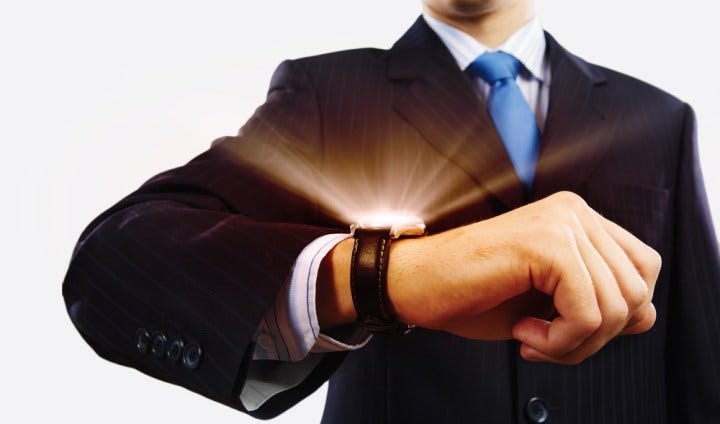
Thinking about his question, and constantly thinking about things I want to write about, I figured: “Ooh, I am going to write my next post about the Apple Watch!”
That would have been the easier version to write, because gadgets are easy to blame. We love doing that. We blame the phone for distraction, the email inbox for anxiety, the app for bad habits, the algorithm for whatever piece of ourselves we are no longer fully in control of.
The truth is, the Apple Watch did not ruin anything for me. It did what it was designed to do, and for a very long time, it did it exceptionally well.
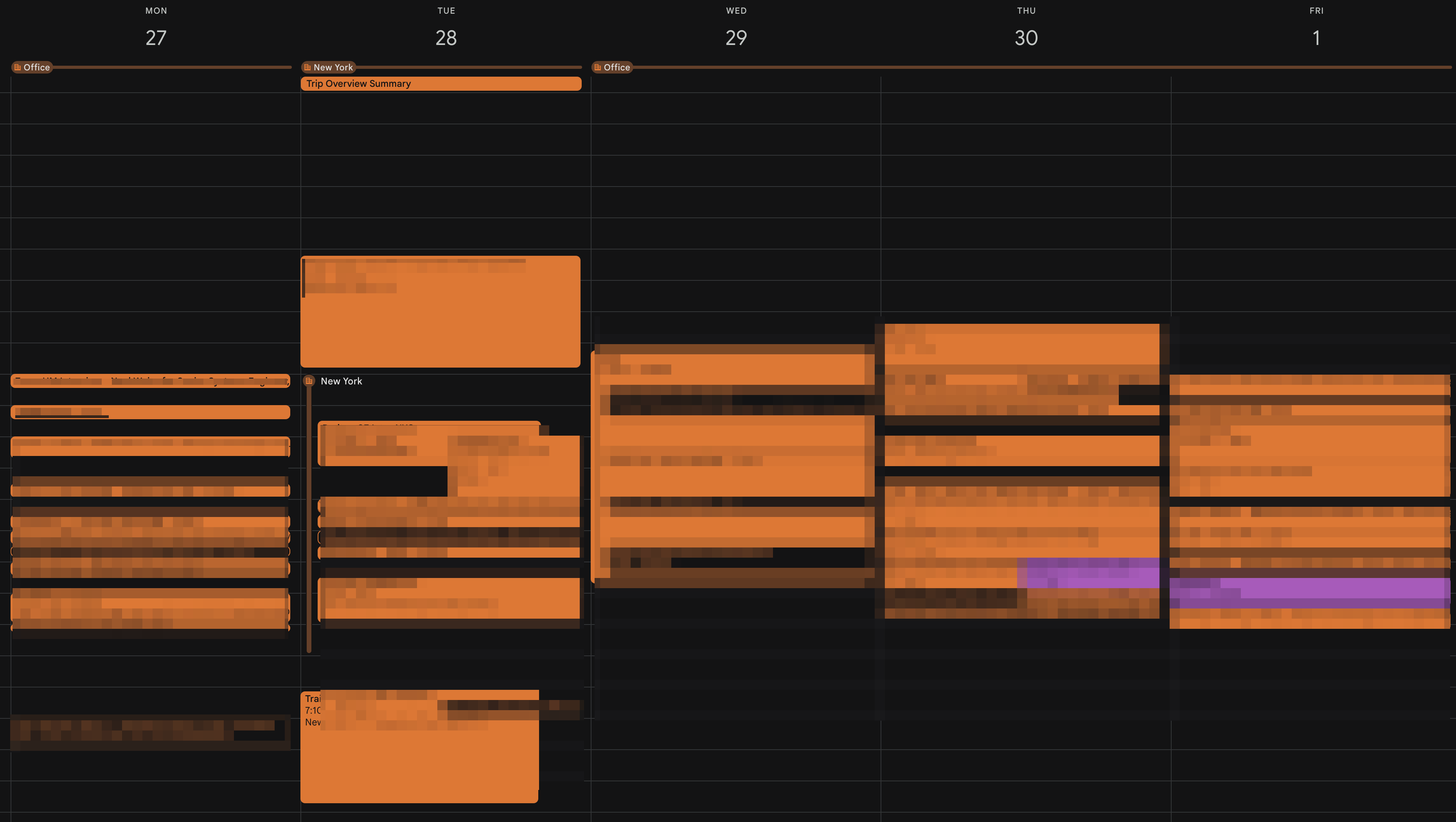
It helped me move more. It made me more aware of how long I sit on Zoom calls when my calendar turns into a game of corporate Tetris.
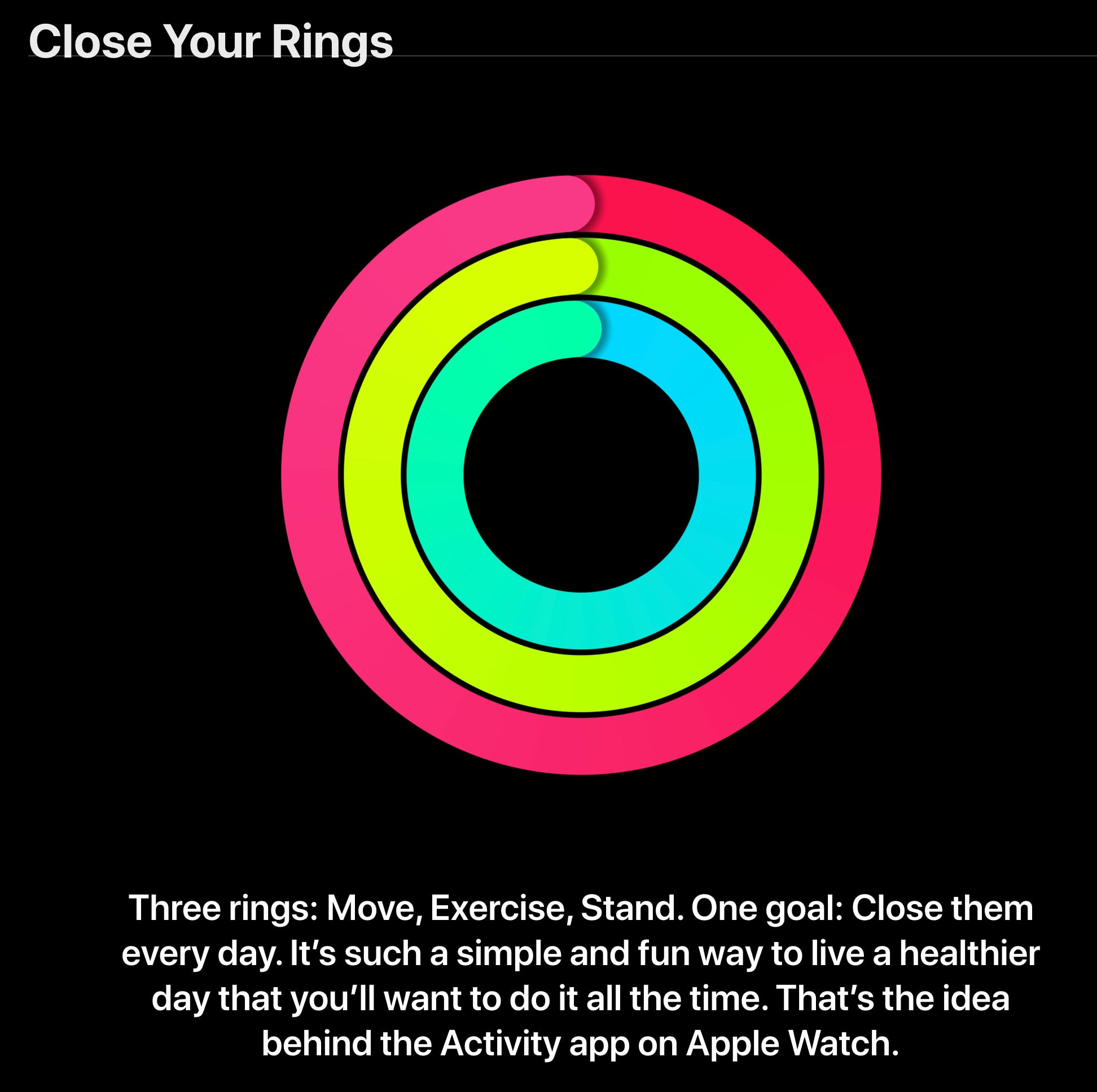
It reminded me to stand. It encouraged me to exercise. It gave me a simple visual language for something I already knew mattered but did not always prioritize: movement.
At first, the rings were harmless. Helpful, even. A small nudge. A little structure. One of those modern conveniences that makes you wonder how people managed before everything on earth became a dashboard.
Then, slowly, almost politely, the relationship changed.
That is the part I keep coming back to, because there was no dramatic moment where the watch crossed some obvious line. It did not become evil. It did not suddenly grow a personality and start whispering threats from my wrist. It just kept doing what it had always done, while I became a little more addicted to it.
And addiction, when it arrives dressed as discipline, is very hard to recognize.
For 3,014 days, I closed the rings. Eight years, three months, and four days.
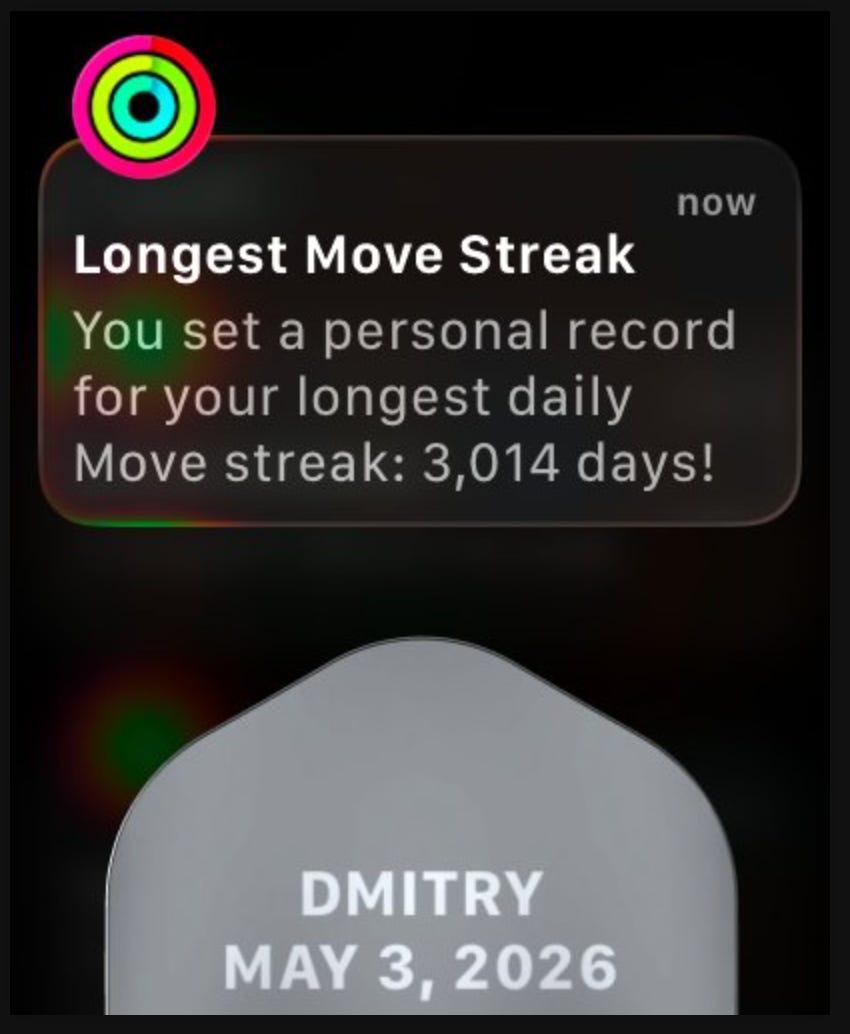
I know that number sounds impressive. It sounded impressive to me for a long time too. It had consistency, and consistency is one of those words we use when we want to feel good about ourselves. Nobody argues with consistency. It is the responsible cousin of obsession.
Eventually I had to admit that the number was no longer simply measuring something I valued. It was starting to become something I protected.
That is a very different thing.
There were days when closing the rings made sense, and there were days when closing the rings was ridiculous. Travel days. Sick days. Days where I had already done enough. Days where being fully present with another person should have mattered more than negotiating with three colorful circles on my wrist. But the streak had its own gravity. Once something becomes part of your identity, you stop asking whether today deserves an exception. You start asking how to avoid breaking the story you have been telling yourself about who you are.
That is where the whole thing became interesting to me, because this was never really about exercise. It was about attention. It was about what happens when a useful tool stops behaving like a helper and promotes itself to management.
The genius of the activity rings is not the hardware. The genius is ‘the loop.’
A cue on the wrist. A number on the screen. A goal that is close enough to feel reachable but not always finished. A reminder. A reward. A streak. A feeling of accomplishment when the circle finally closes. Repeat that hundreds of times, then thousands of times, and eventually you are not just training your body to move.
You are training your attention to keep checking whether you have earned permission to feel complete for the day.
People call this a “dopamine hit,” which is one of those words that sounds scientific even though it simplifies basic human biology into something ‘cute.’ Your brain is not handing out tiny ‘pleasure coupons’ every time a ring closes.
The system teaches you that certain cues matter, that certain gaps must be resolved, and that completion brings relief. It does not have to be dramatic to be powerful. In fact, the quietness is what makes it powerful.
The watch did not need to control me. It only needed to become part of the rhythm.
That is the socially strange part of smartwatches. Like I wrote in the beginning, looking at your phone in the middle of a conversation is obviously rude. Everyone around us knows what happened. You may still do it, because we are all trying our best, but at least the social contract is clear. You left the moment, and everyone saw you leave.

A watch glance is different. It is smoother. Faster. Easier to excuse. You can tell yourself you were checking the time, which is the adult equivalent of “What?! I was just looking...” It feels less rude, so it slips under your own moral radar. You can be physically standing in front of someone while psychologically negotiating with a metric, and because your hand never reached for your phone, you get to pretend you stayed present.
But I knew I had not.
That bothered me more than the fitness part.
I started noticing these little exits. A glance during a conversation. A check during dinner. A peek while driving (my wife hates it). A tiny mental interruption while walking with someone, not because I needed information, but because ‘the loop’ wanted me to know where we stood. It is embarrassing to admit that a grown man was allowing a wrist computer to shape his behavior. But embarrassment is sometimes the tax you pay for honesty.
The more I thought about it, the more the distinction became clear.
Discipline is when we direct a behavior toward something we value. Compulsion is when the behavior starts directing us.
The activity itself can be healthy. That is what makes this tricky. Walking is healthy. Exercise is healthy. Paying attention to your body is healthy. None of that is the problem. The problem begins when the activity can no longer be interrupted by context, judgment, courtesy, or common sense.
A healthy ritual should be able to survive a missed day.
If it cannot, maybe it is not a ritual anymore.
Maybe it is a cage with better branding.
What made this more uncomfortable is that I could not isolate it to the watch. Once I saw the pattern there, I started seeing it everywhere.
Business dashboards. Email response times. Social media ‘likes.’ Sleep scores. Readiness scores. Productivity apps. Every system promises clarity, and many of them deliver it, at least at first.
I am not anti-metric. That would be ridiculous coming from someone who has spent a career in technical sales and engineering.
Metrics do matter.
But metrics become dangerous when they stop informing judgment and start replacing it.
That is true in business, and it is true in life. A forecast can help you understand the business, but if the forecast becomes the business, you start managing optics instead of reality. A fitness tracker can help you understand your health, but if the tracker becomes health, you start serving the score instead of your body.
A productivity system can help you focus, but if maintaining the system becomes the work, congratulations, you have built yourself a very elegant administrative prison.
This is where ambition gets complicated too.
We all like clean sayings.
“You cannot succeed at something you do not love.”
You can absolutely succeed at something you do not love, at least for a while. People do it every day. They succeed on duty, fear, ego, financial pressure, and the terrifying realization that other people are depending on them.
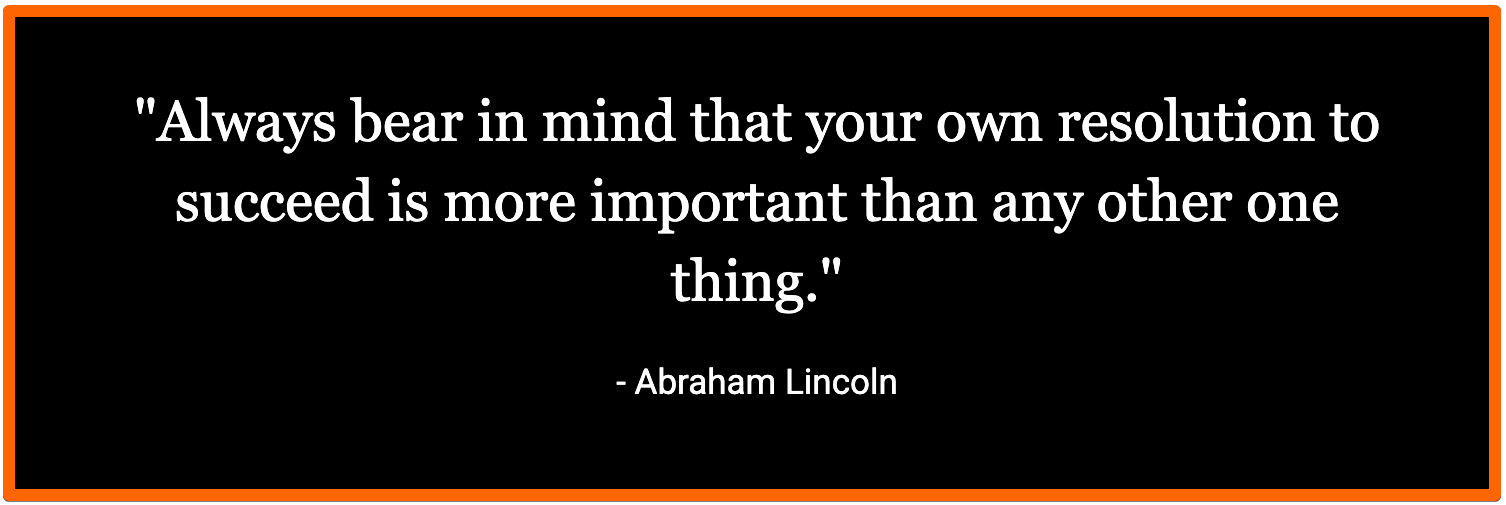
Adult life is full of things we do not romantically love but still value.
But the research-backed version is more useful than the bumper sticker version. Long-term motivation works better when it feels owned. Not easy. Not magical. Owned. You do not need to love every minute of the work, but you do need to see yourself in the reason you are doing it. There is a difference between effort that expresses your values and effort that simply extracts them from you.
That is why I keep coming back to the watch.
The ring system gave me a very specific kind of intent.
Move. Close. Repeat. Protect the streak.
It was narrow, clear, and incredibly effective. But eventually I had to ask whether that kind of intent was still serving the life I wanted, or whether it had become a way to avoid choosing for myself.
Last night I decided to go back to a regular watch.
That sounds small, and maybe it is. I am not claiming that wearing an analog watch is some grand moral achievement. A plain watch will not make anyone wiser. Unfortunately, the watch industry has not yet solved character development.
But a plain watch does one thing honestly.
It tells time. That is it.
No score. No alerts. No awards. No rings. No quiet suggestion that my day is incomplete because ‘a machine’ has not yet been satisfied. It gives me the information and then leaves me alone, which now feels almost radical. I am sure after 3,014 days of obsession, it will be hard to recover.
P.S. This morning I went for a run. It’s my normal route, so when I got to the end of the first mile, I was expecting a buzz on my wrist and Siri voice in my headphones saying: “Split one, split pace: X minutes and Y seconds per mile.” When it didn’t happen I felt something weird - almost loneliness. So this is what a withdrawal is going to look like. Oh, my… Buckle up, this is going to be rough.
I still want to move. I still care about health. I still believe in discipline. I am not trying to become the guy who rejects modern technology while writing about it on a laptop connected to cloud services, wearing Bluetooth headphones, and probably checking three different apps before breakfast. That would be a little too rich, even for me.
What I want is simpler. I want the decision back.
I want to walk because walking is good, not because a bracelet is disappointed in me. I want to be in a conversation without quietly leaving through my wrist. I want to notice when a system that once helped me is now asking for more than it deserves. I want to remember that the point of measurement is to improve life, not to replace it with a scoreboard.
The uncomfortable lesson is not that smartwatches are bad. They are not. For many people, they are genuinely helpful, even life-changing. The lesson is that any system can become dangerous when it cannot be interrupted by your actual priorities.
Health that takes away from being present in the moment is a bad trade.
Productivity that undermines attention is a bad trade.
And eventually, whether the system is on your wrist, in your inbox, or in your own head, you have to ask the simple question:
Is this helping my life, or is it just helping me keep score?
That is the part I did not see coming when I first put on the smartwatch.
So, yesterday was the last time I closed the rings. As with all addictions, the withdrawal will probably be painful.
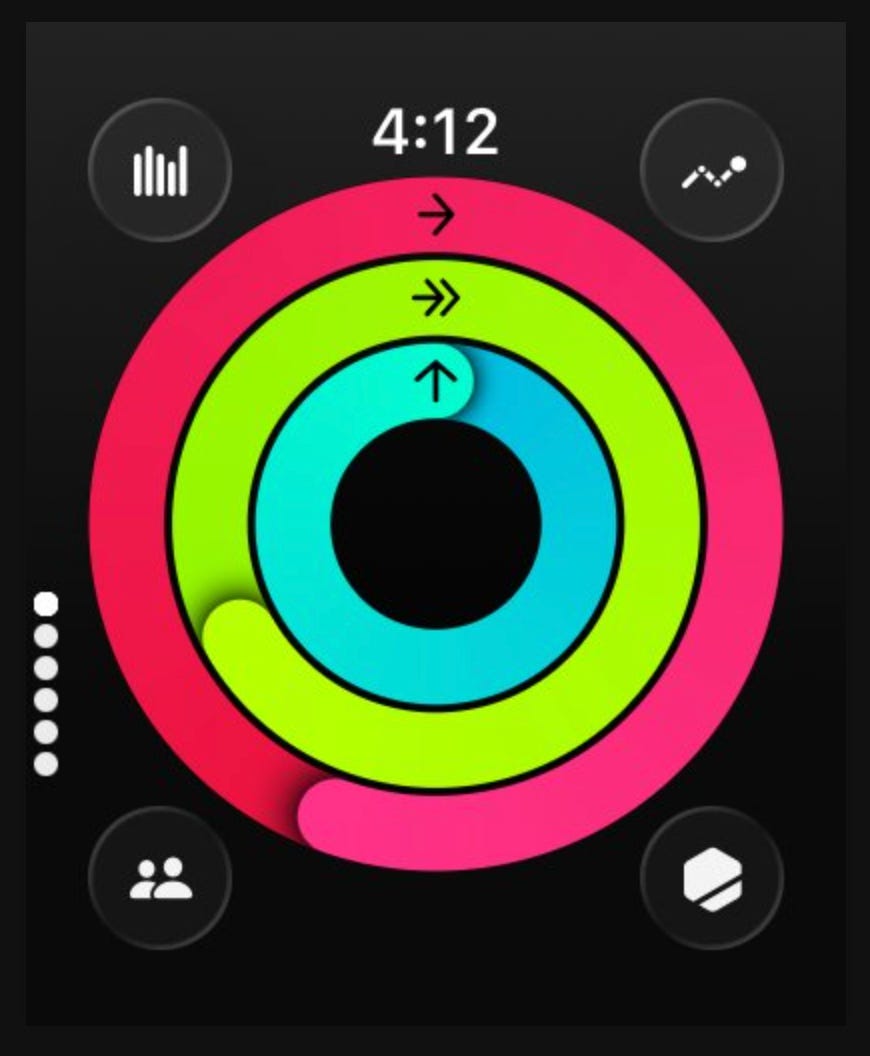
I really thought I was tracking time, movement, and health.
But after 3,014 days, I realized the more important question was what the tracking had trained me to ignore.
Time is not for closing rings forever.
Time is for people. Time is for family and loved ones. Time is for work that matters. Time is for rest that does not need to be justified by recovery metrics. Time is for walking without reporting back to anything. Time is for choosing the life before the metric chooses it for you.
And maybe that is why the plain watch feels so appealing right now.
Not because it does more. Because it finally does less.
Appreciate you reading.
Dmitry Gorbatov
© 2025 Dmitry Gorbatov | #dmitrywashere
Dmitry, I read all of your blog posts - and this is my favorite thus far.
I think I'll ditch my smartwatch today and wear one of my beloved old mechanicals, instead.
Thank you for sharing this with us.
My favorite line, which I think summarizes the entire article well, is "It was about what happens when a useful tool stops behaving like a helper and promotes itself to management."